26 jun Stripe wallpaper with an architectural edge: five designs for color-forward interiors
Reading time: 7 minutes
Color is back in the room — and it brought stripes with it.
Not as accent objects or cushions, but as a full commitment to walls, to pattern, to spaces that know what they want. The stripe, always useful, always present somewhere in the background of interior design, now has a spotlight of its own. Apartment Therapy named “stripe drenching” one of 2026’s defining interior trends, highlighting the full commitment to bold, graphic pattern across a wall or a room.
You can see where this blog is going. I’m not one that jumps on every trend — I always prefer something that endures. But when what is trending is the good old stripe and joyful color, I’m definitively all in. Today I want to show you some of the designs I’ve recently developed for Happywall, sitting right at the intersection of color and bold lines.
Designing for Happywall gives me something most repeating patterns don’t — the scale to think about the wall architecturally, not just decoratively. Unlike traditional wallpaper rolls, which impose a fixed width and repeat structure, Happywall’s mural format treats the whole wall as a single canvas. That’s what allows me to put on my architect’s hat and approach the wall as a spatial element, not just a surface to cover.
One thing worth understanding about what you’ll see here: vertical stripes tend to draw the eye upward, emphasizing ceiling height. When the wall is divided — a color block, a checker, a scallop border interrupting the vertical flow at roughly dado height — that upward movement is interrupted. The room feels grounded rather than stretched. In spaces with high ceilings, that’s a considered solution. In standard rooms, it provides the sense of structure that dado rails or paneling would otherwise give. In a complete interior project, this division can also frame furniture and statement objects, giving the room an extra layer that brings color, interest, and the ability to pull everything together.
Vertical stripes tend to draw the eye upward, emphasizing ceiling height. When the wall is divided the room feels grounded rather than stretched — the sense of structure that dado rails or paneling would otherwise give.
1.
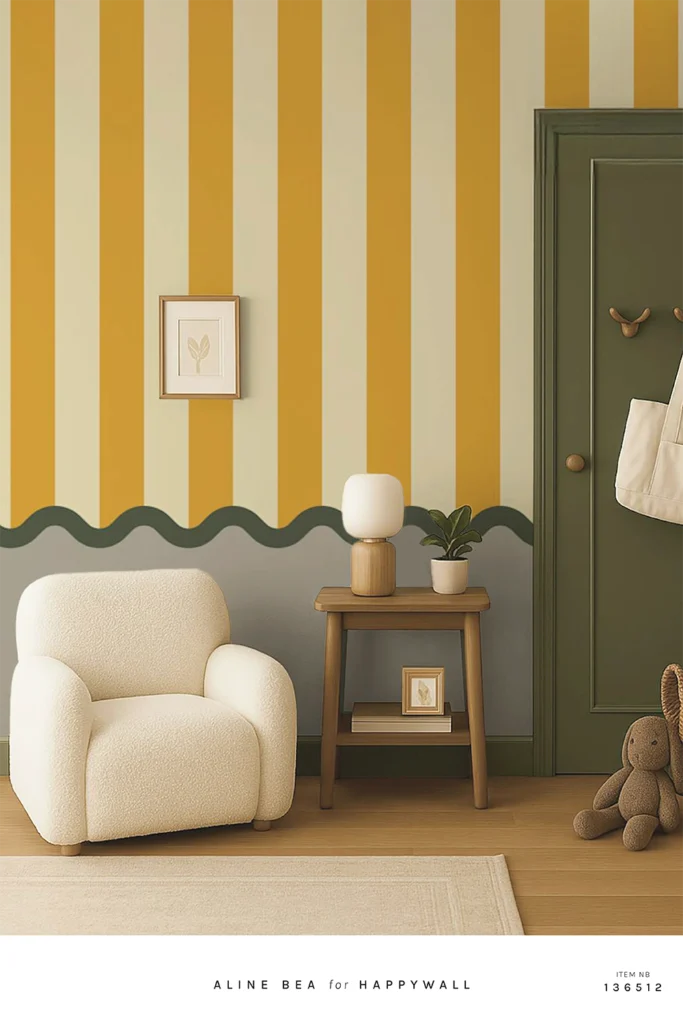
The Scallop That Changes the Room
A dividing line with a groove.
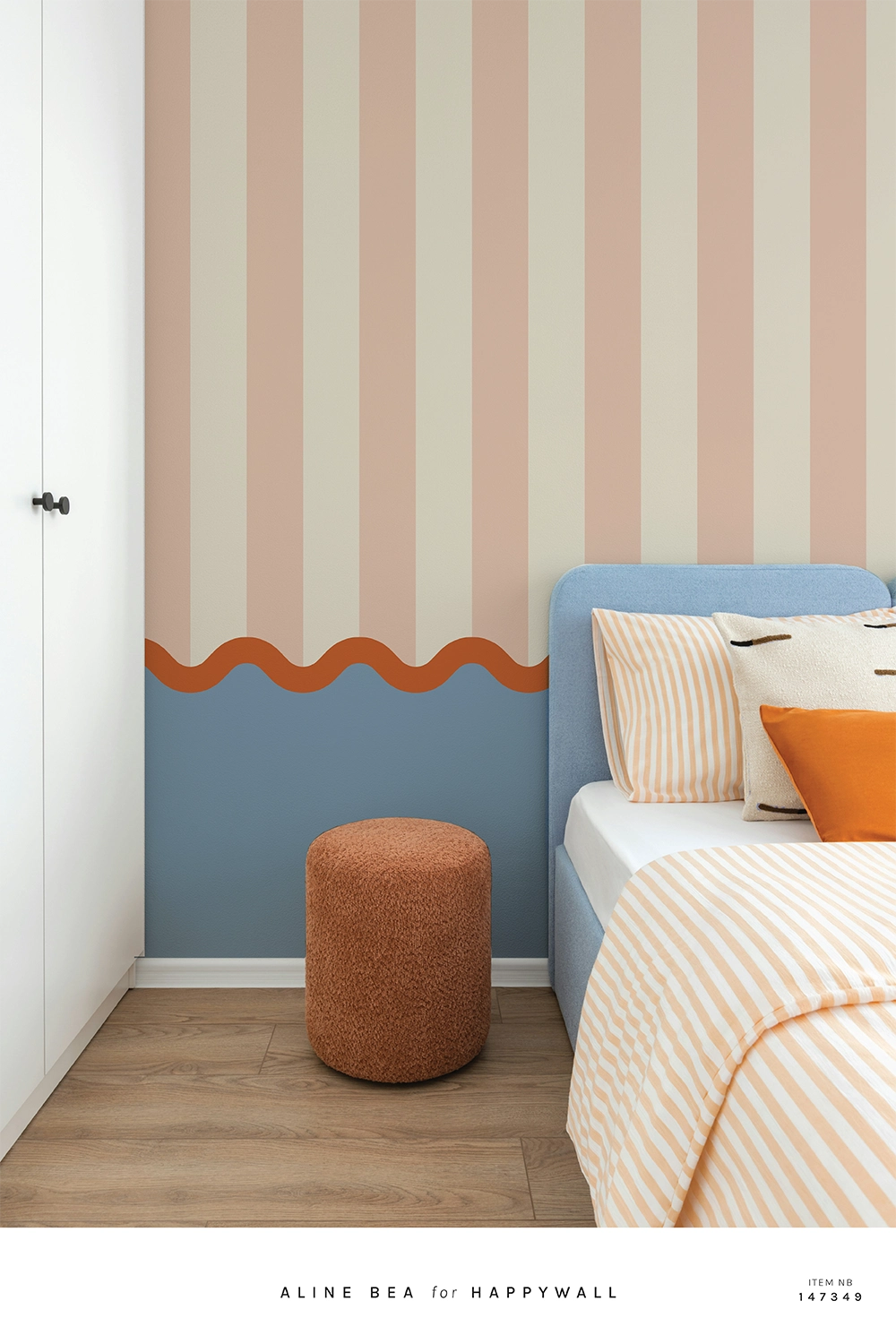
The scallop border works like that friend who walks into a room and immediately shifts the energy. It breaks the silence of the solid base and the rigid vertical lines of the stripe above it, and infuses the space with a sense of play and an extra note of color. That dynamic is also explored across the colorway range — unexpected combinations of muted stripes with a bolder scallop hue, or the reverse.
What the image shows in one palette — and what the other colorways open up entirely — is how much the mood shifts with color alone. The structure stays. The room it suits changes completely. Explore all colorways at Happywall.
This is also, in spirit, what the resort interiors making the rounds on Pinterest are reaching for – the ease, the generous scale, the confidence of the classic cabana stripe – but taken somewhere more considered.
2.
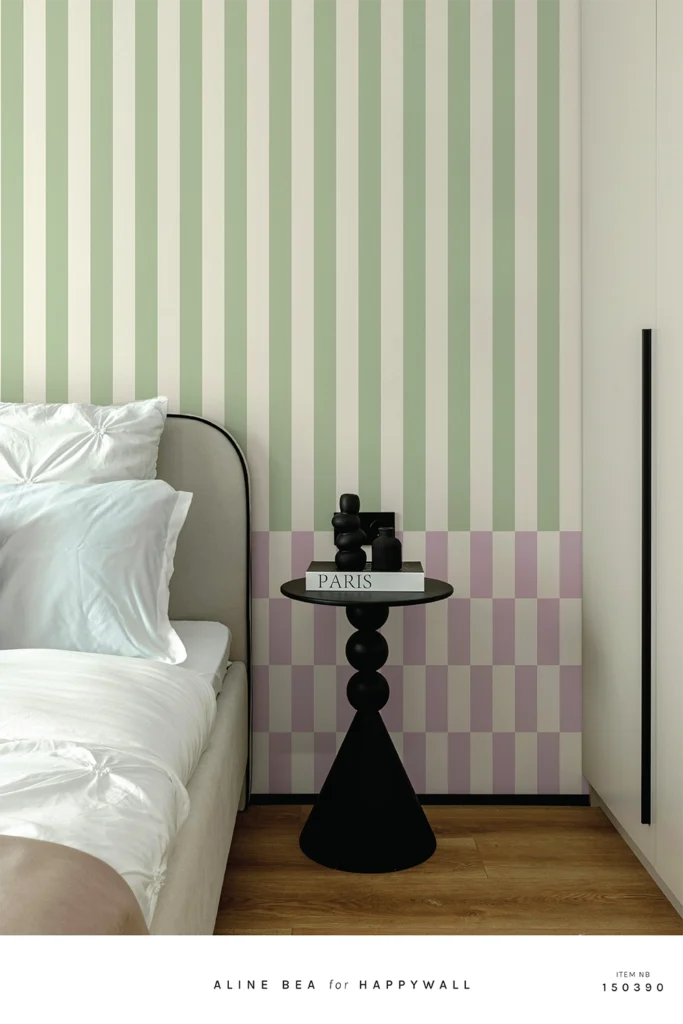
A Playful Family
Stripes and checkers forever
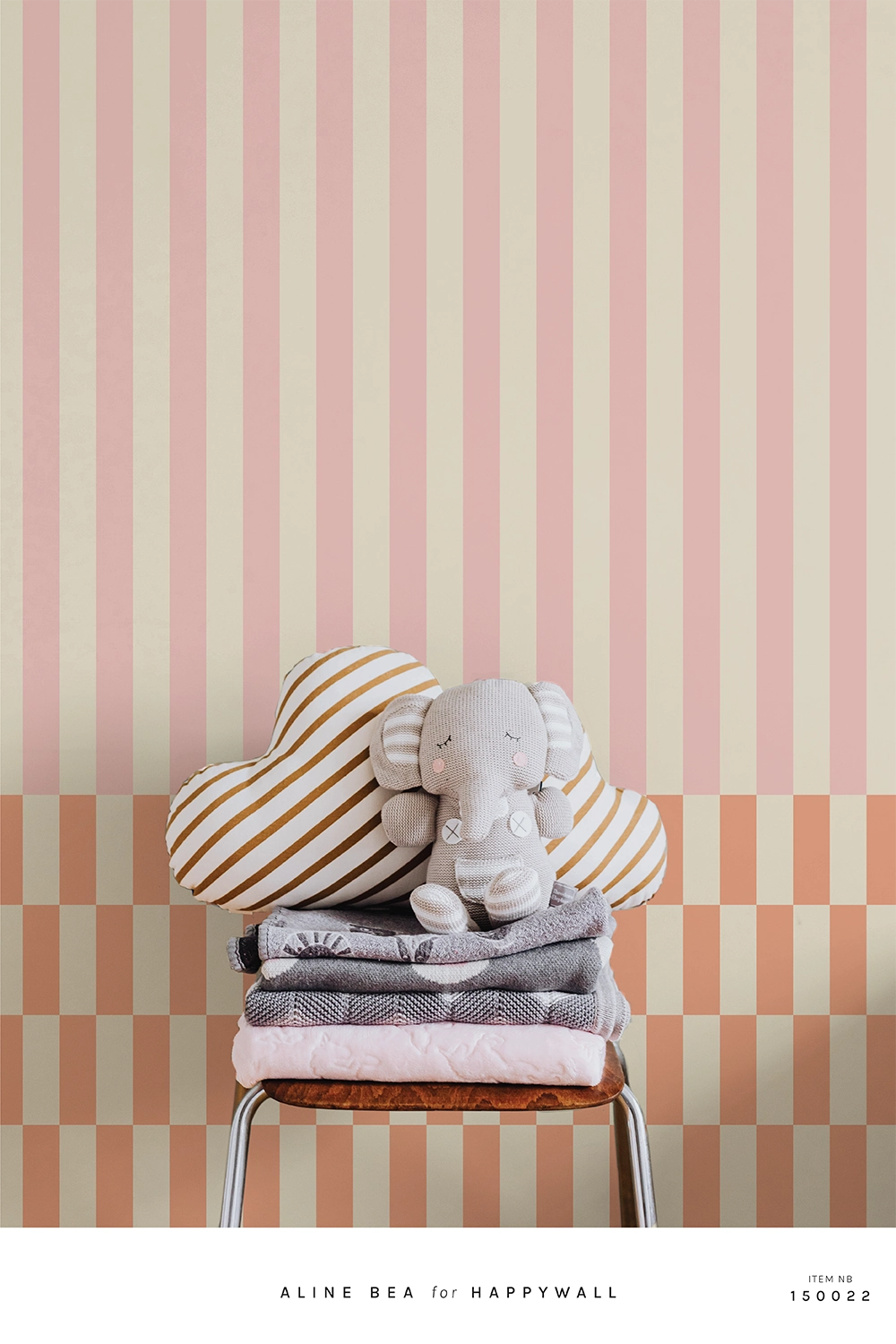
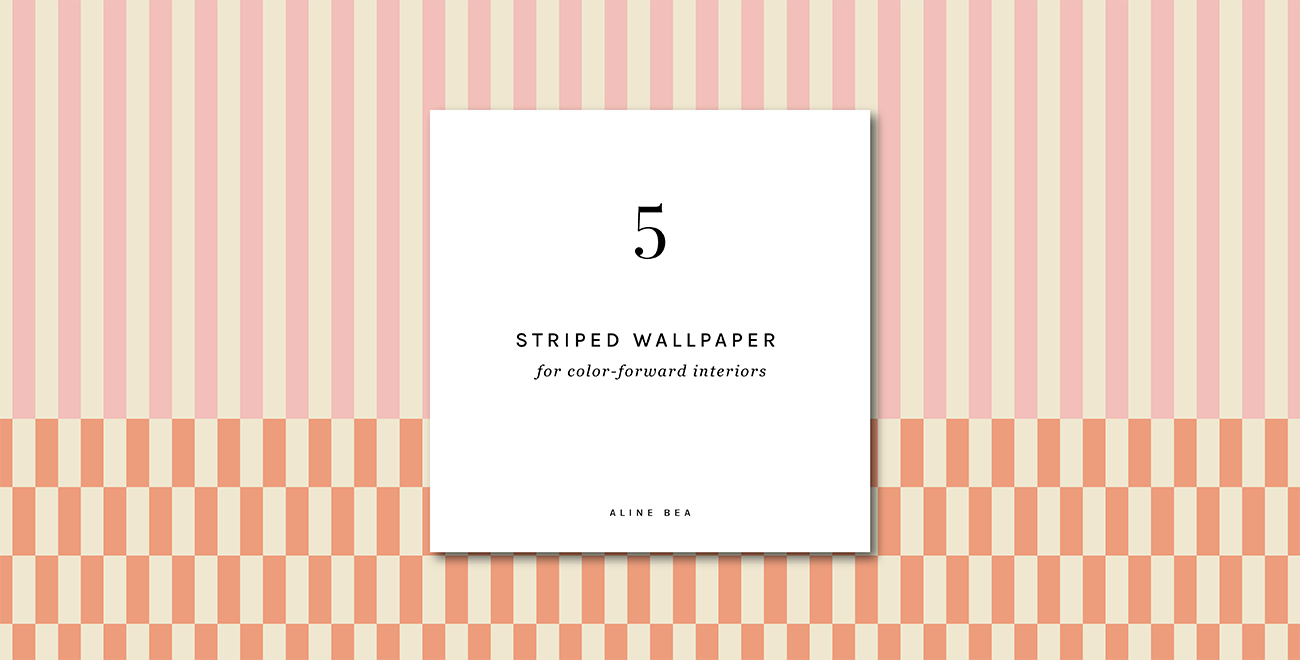
Another timeless element that keeps returning is the stripe’s closest relative: the checker. Here it forms the base of the wall, and the transition between top and bottom is more subtle than a border, more familiar.
In softer palettes, this design works at a register closer to texture than pattern. In darker or more saturated versions, it becomes a room’s full stop. Either way, the wall looks resolved — the kind of resolved that usually requires sourcing two separate products and hoping they’ll agree. A smart, considered solution that will stay relevant long after the trend conversation has moved on. See other colorways.
3.
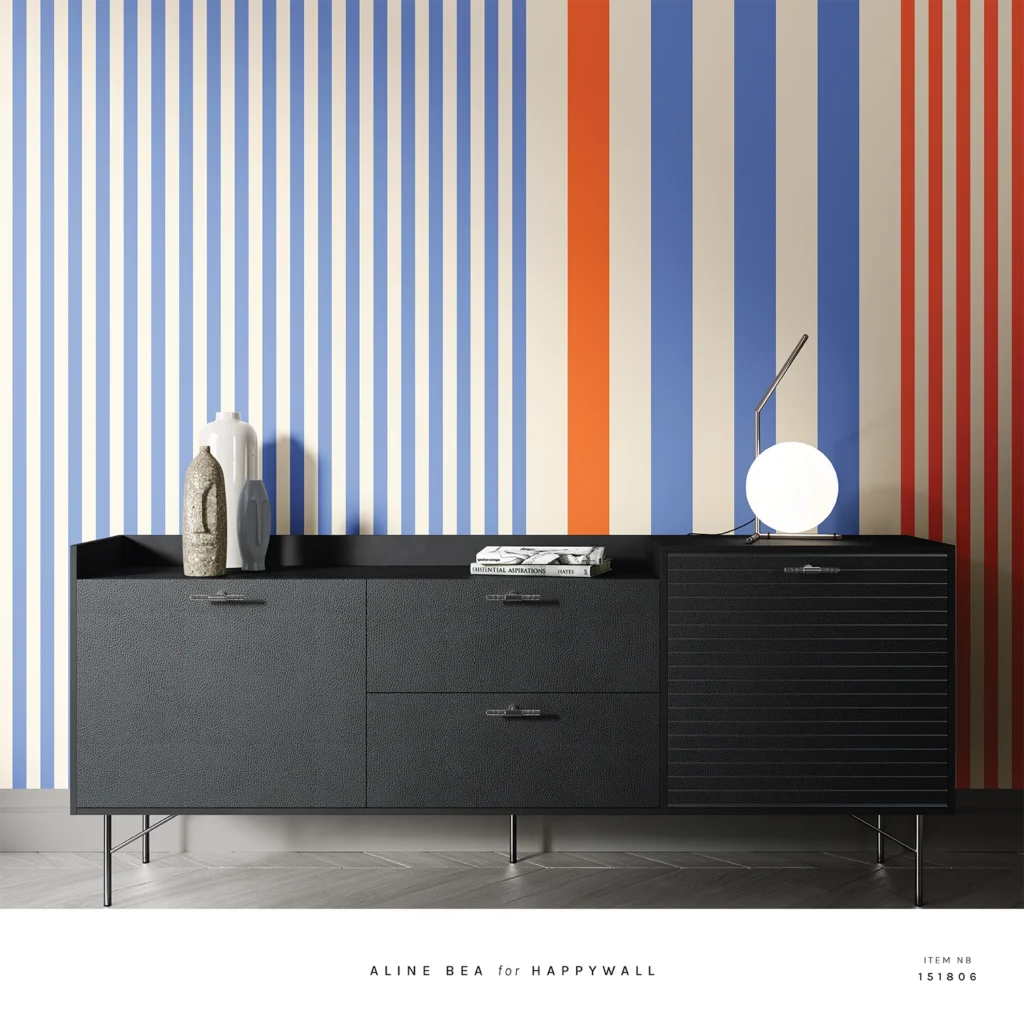
More Than a Wall Cover
Some walls don't need to be balanced. They need to be committed to.
The varying widths here — narrow, wide, narrow, wider still — give the eye a rhythm to move through rather than a pattern to scan. In a corridor or passage space, that rhythm can inform the sense of flow and direction. Above a console or a run of shelving, it frames what sits in front of it rather than competing with it. In commercial environments — a boutique, a studio, a statement reception — it does the work of a designed interior with a single decision.
The effect is closer to a color field than a repeating motif, which means it scales with the room rather than against it. One wall as a focal point, or all four without apology. The palette shown is one reading; in a darker register it becomes architectural and contemporary, in a lighter one, effortlessly resort. All colorways on Happywall.
4.
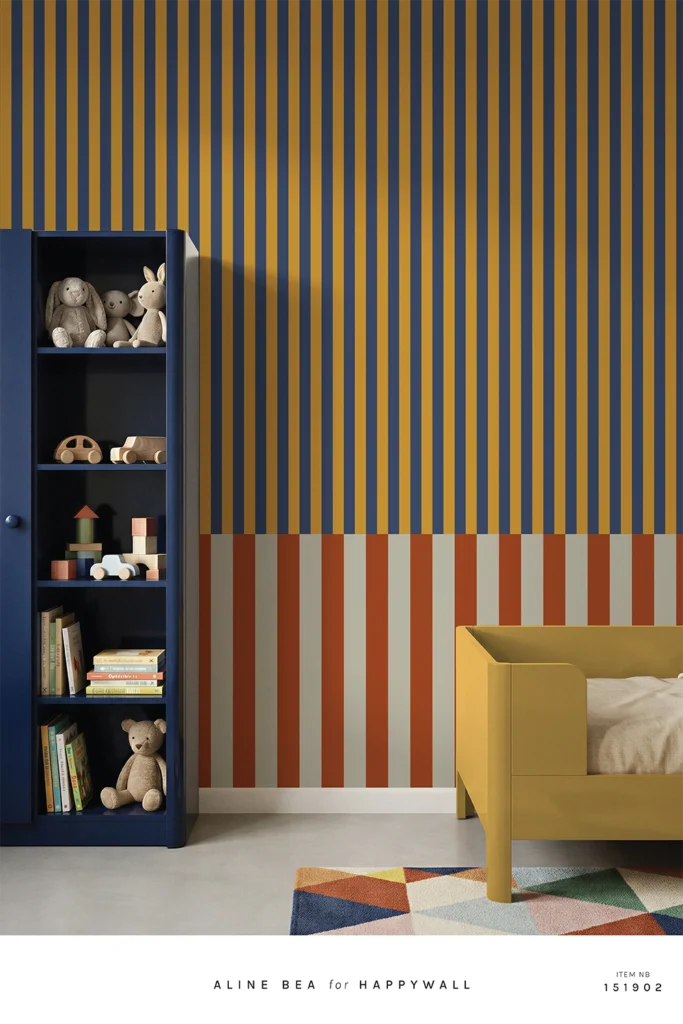
Stripe Drenching, Resolved
No such a thing as too many stripes
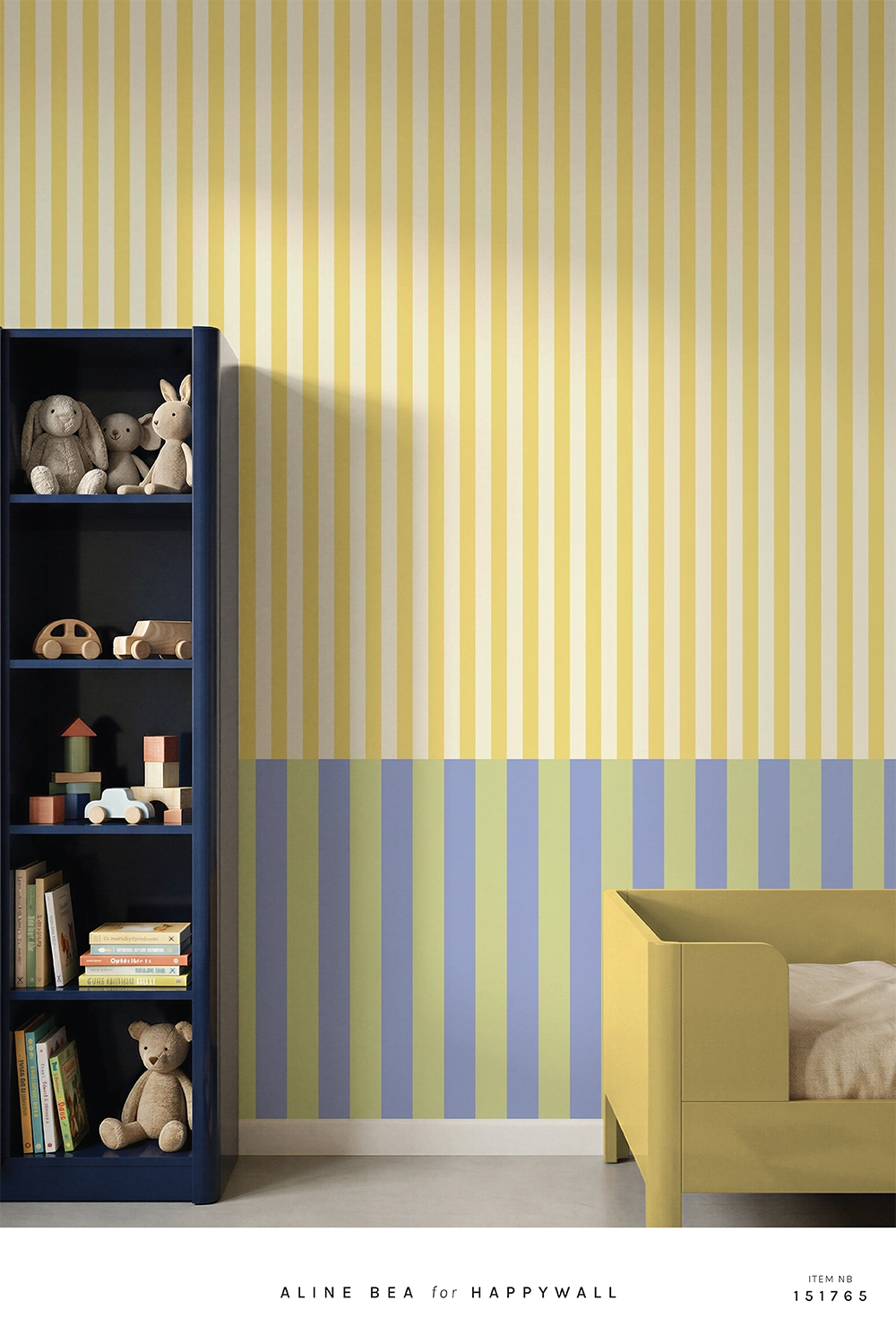
This is the design that explains stripe drenching in a glance. Just stripes — in different widths and colors, marked by a clean horizontal division at the base. The reference to painted millwork, to rooms with dado rails and considered proportions, is intentional. The playfulness of the palette softens the geometry; the geometry gives the palette somewhere to land.
All colorways are deliberately calibrated around the same tension: warm against cool, narrow against wide. The result is that even the moodier palettes stay grounded, but never grim. Explore all colorways on Happywall.
5.
When the Stripe Becomes Something Else
Geometry arrives at the party
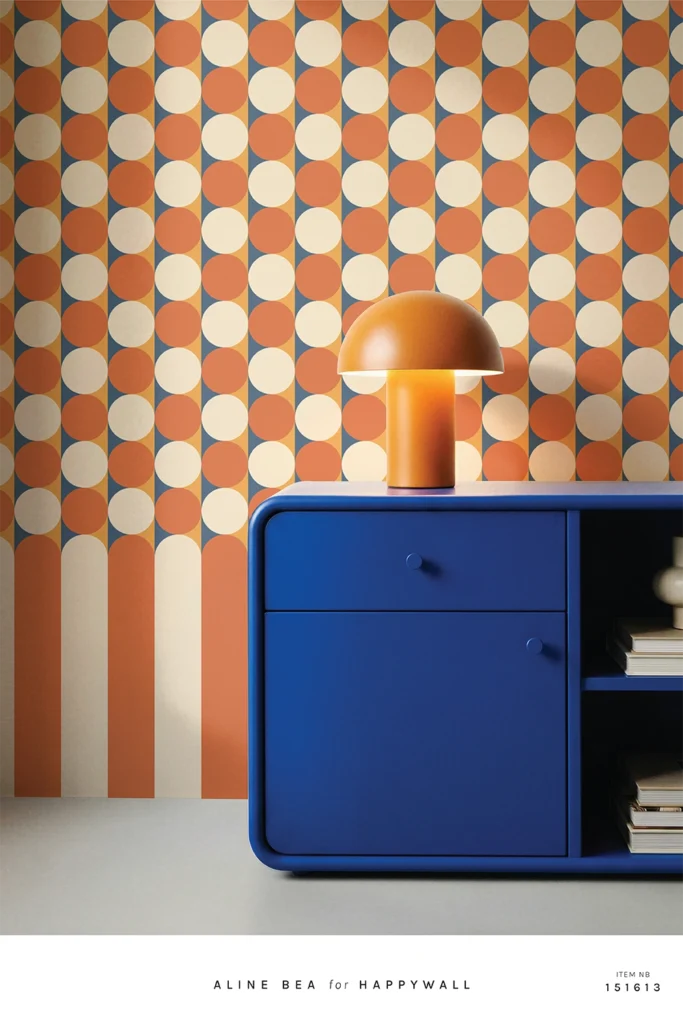
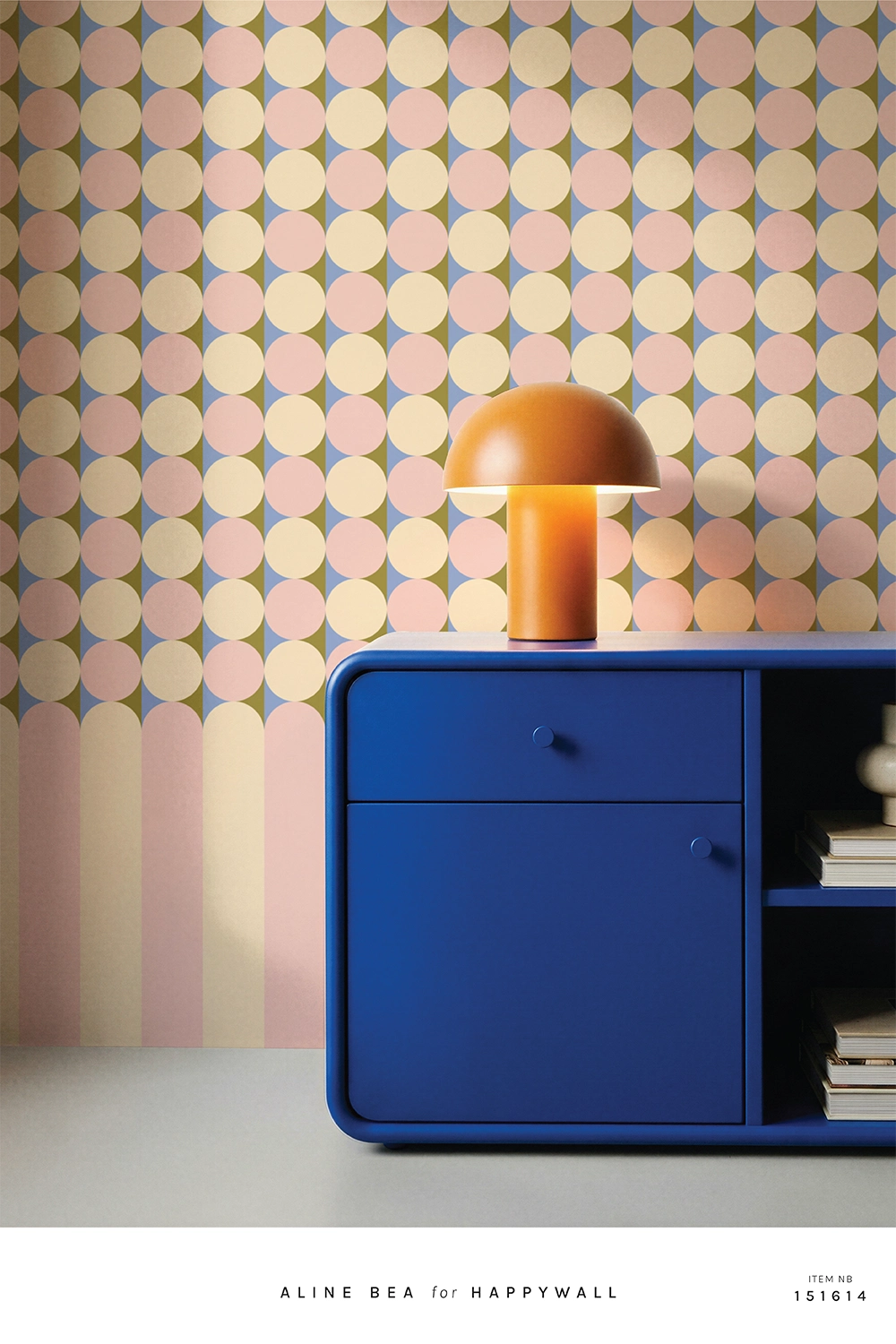
The stripe has always been elemental enough to disappear into other things — the invisible grid behind more complex geometries, the structure underneath the surface. In this design, it’s the foundation the circles rest on, and the arches at the base are the stripe, evolved.
Mid-century design understood this: that geometry could be playful and rigorous at the same time, that a pattern could carry both rhythm and surprise. This is where the geometric thinking behind the whole series finds a different form.
It closes this particular edit opening the door to new ones. See all colorways.
There's something telling about the fact that bold color and graphic pattern are trending at the same time. Interiors are loosening up — becoming less about getting it right and more about making it yours. A stripe, of all things, turns out to be one of the more joyful ways in.
shop wallpaper
Exclusive at Happywall
All designs are available on Happywall, made to order for your exact wall dimensions. You decide where to crop the design, no material waste.
Material: Non-woven, PVC-free, printed with eco-friendly inks
Finish: Happy Mattic™ — matte, non-reflective, washable
Installation: Paste-to-wall or peel & stick (Happy Mattic Peel&Stick™)
Sizing: Custom to measure — standard walls, sloped ceilings, multi-wall orders all accommodated
Shipping: Free worldwide; produced and shipped from Sweden
color customization
Need a different color for your project?
I’m always happy to help. Let me know what colors your project needs and I’ll make them available on Happywall, free of charge. You can email me directly if you need some extra help, or fill out the recolor form with your request. I’ll get back to you once the new color is available.
Trabalhe comigo
Hello wallpaper brands and manufacturers
Vamos conversar!
These designs were made specifically for wallpaper — in terms of scale, composition, and how they behave on a wall. If you’re a wallpaper brand or interior product manufacturer looking to license geometric designs of this kind, to develop a direction like this further, or to discuss something entirely different, I’d be glad to hear what you have in mind. Vamos conversar!
Comentários